
Joninės (written Jonines in English) is Lithuania’s midsummer festival, also called Rasos or Saint John’s Day. It is celebrated on the night of 23 June, just after the solstice, when daylight lingers longest and the air smells of cut hay. Today villages, parks, and riversides still glow with flames, oak-leaf wreaths, and folk songs that last until dawn.
What is Jonines? Where does the festival come from?
Every 23 June, Lithuania slips into a special half-light. Chronicles first mention the festival in 1372; they describe pagan rites that German crusaders tried to suppress, yet the customs survived and later fused with the feast day of Saint John the Baptist.
How is Joninės celebrated in Lithuania?
Fire and water rule the night. Couples leap glowing logs to “help” the sun begin its homeward arc; a burning wheel may roll downhill, scattering sparks across fields that locals hope will ripen grain. At midnight young people head quietly into the forest, chasing the mythical fern blossom said to appear for a heartbeat and grant foresight to whoever sees it. When the first birds call, everyone washes in cold dew, convinced, just as their ancestors were, that it heals skin and brightens the year ahead.
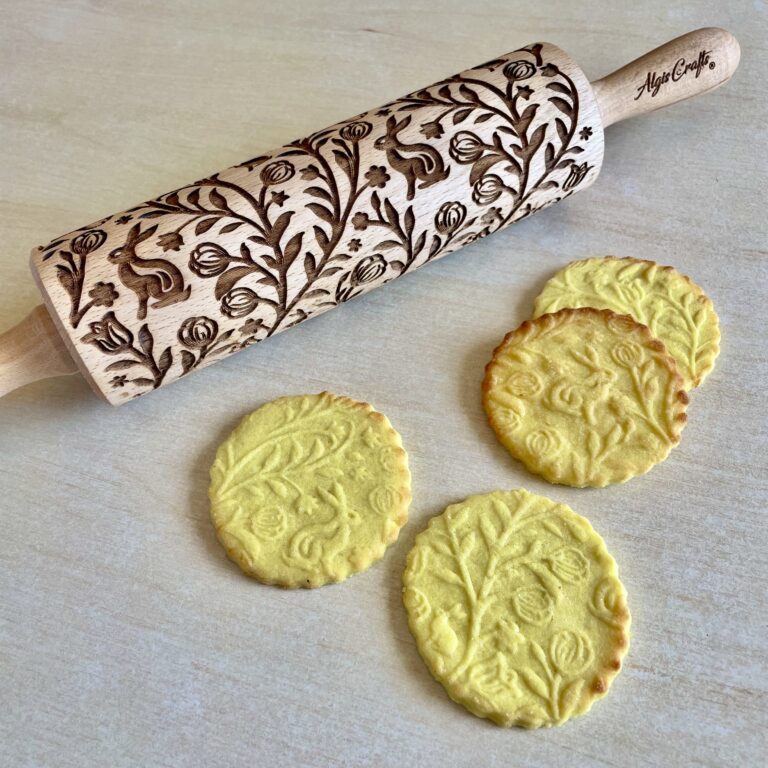
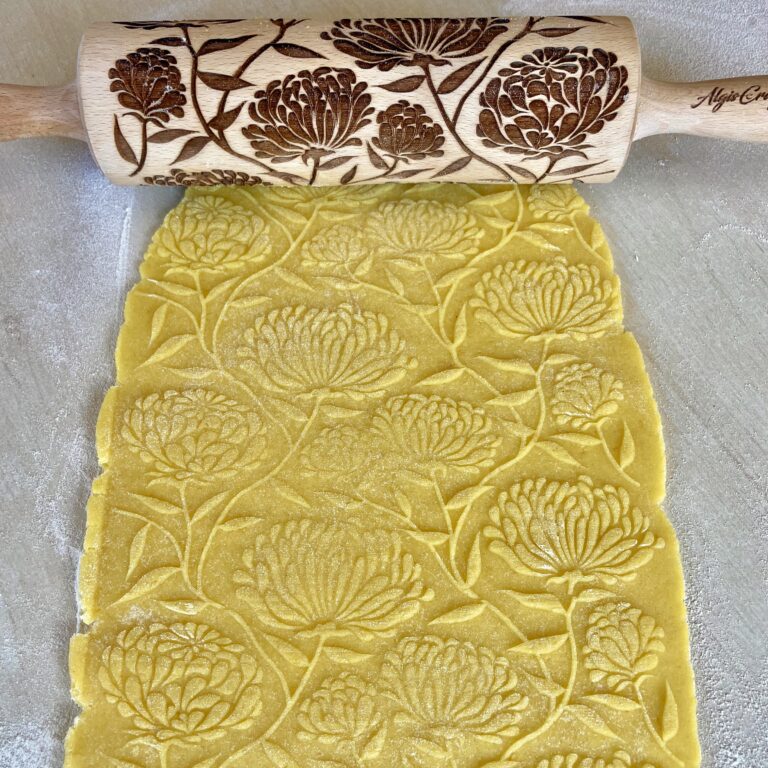
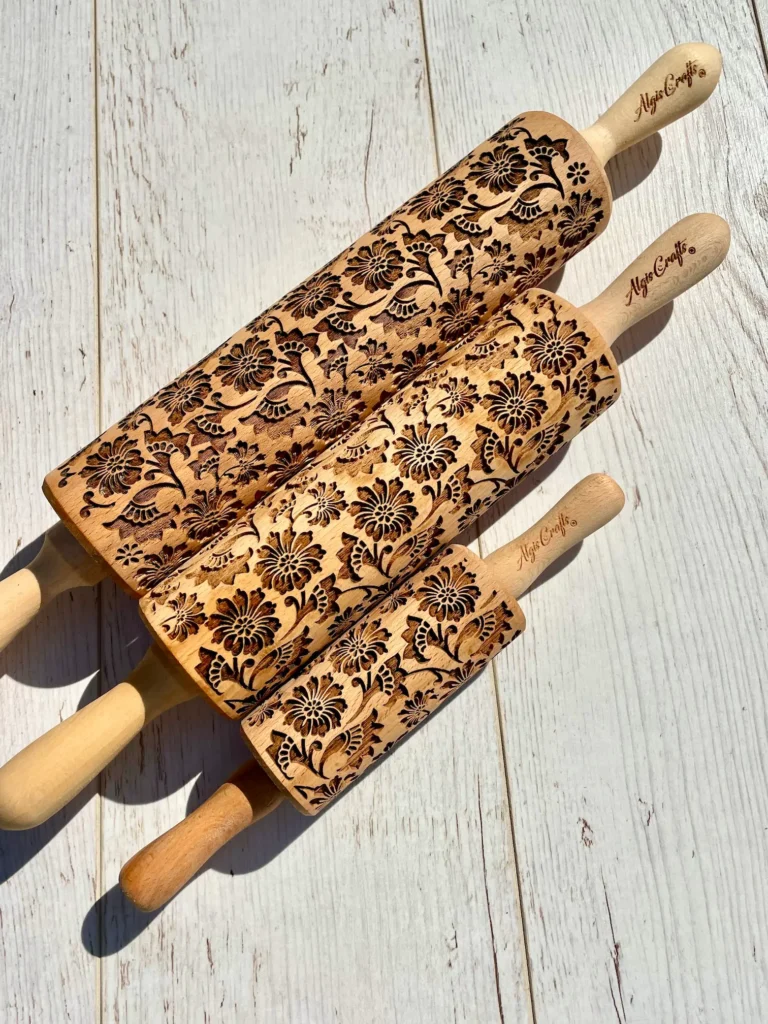
Joninės rolling pins from Algis Crafts
Algis Crafts captures those symbols in wood and clay. Three full-size birch embossed rolling pins are inspired by the shortest night, each laser engraved 3 mm (about 1/8 inch) deep so its pattern remains sharp after baking:
May the ember glow touch your dough, may the dew keep its promise, and may a tiny fern somewhere remember to bloom just for you.