Yes, an engraved rolling pin really works, as long as the dough and its temperature are right. Use a firm dough without baking powder, press the pattern in with medium, even pressure, and chill the cut cookies before they go into a hot oven, and the design stays sharp after baking. When a pattern fades, the cause is almost always the recipe or warm dough, not the pin.
Engraved rolling pins look amazing, but do they actually work? The answer is yes, when you know how to use them. With the right tips and a little practice, you can create cookies, crafts, and more that look just as good as they taste (or as fun as they are to make). Here is our honest answer, including why patterns sometimes fade and exactly how to fix it.

How does an engraved rolling pin work?
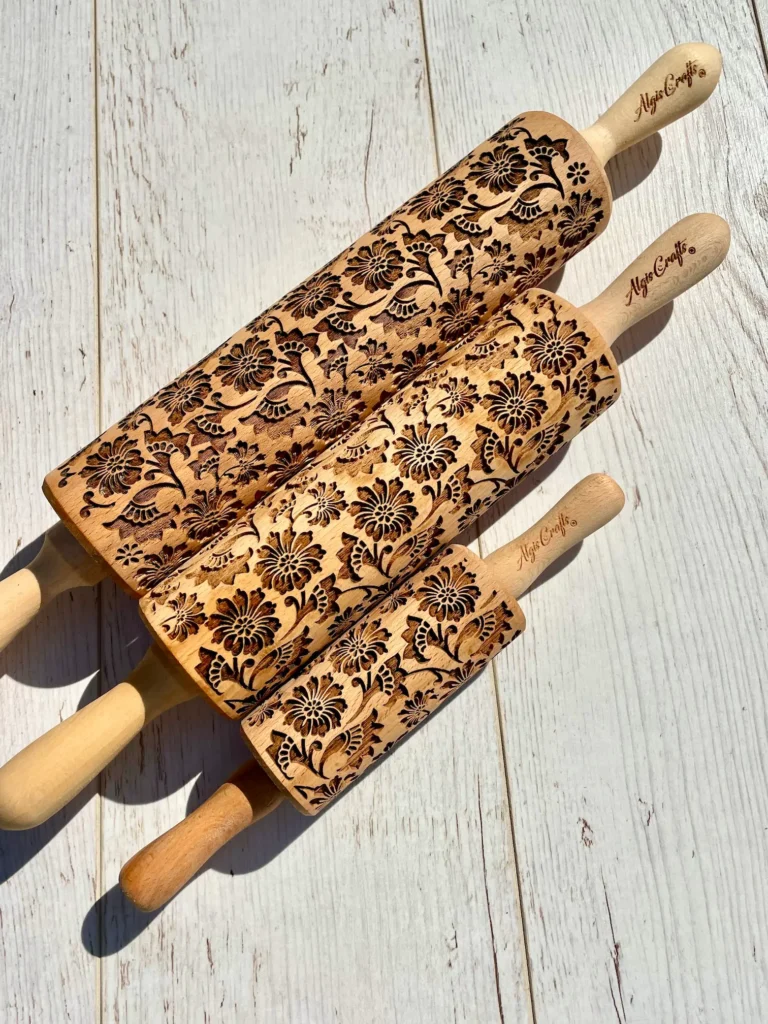
An engraved rolling pin, also called an embossed or patterned rolling pin, has a design cut into the surface of the wood. We laser engrave ours, so the lines are clean and even all the way around. As you roll, the flat surface of the wood presses the dough down and the engraved areas leave it raised, so the whole design appears on the dough in one pass. On our REGULAR (M) pin, one full turn unrolls a pattern about 19 by 19 cm (7.5 by 7.5 in).
Engraved describes the pin and embossed describes the result on the dough, so both names mean the same tool. Traditional hand-carved rolling pins work the same way; laser engraving lets us repeat fine detail, like names, lettering and small animal faces, evenly around the whole pin.
Do embossed rolling pins work for baking?
Embossed rolling pins for baking work best with firm doughs that don’t rise or spread. Our favorite is a plain butter cookie dough, but several other bakes work well too:
| Dough or material | Result | Notes |
|---|---|---|
| Butter cookies and shortbread | Excellent | Firm, rich doughs hold the finest lines |
| Sugar cookies without baking powder | Excellent | A smooth surface shows every detail |
| Ginger cookies without leavener | Very good | Choose a recipe with no baking soda |
| Pie crust | Good, with care | Emboss the top crust or cutouts and chill before baking |
| Fondant and marzipan | Very good | Dust with powdered sugar or cornstarch instead of flour |
| Chocolate chip and cakey doughs | Not recommended | They puff and spread, and chunks break the pattern |
| Any dough with baking powder or soda | Not recommended | Rising blurs the design in the oven |
Why do embossed patterns fade in the oven?
If your first batch came out blurry, you’re not alone. These are the usual reasons:
- Baking powder or soda in the dough. Leaveners make the dough rise, and the lines soften as it puffs.
- Warm dough. If the cookies go into the oven soft, they spread before the surface sets and the pattern stretches.
- Too much liquid. Wet, sticky dough clings to the engraving and loses detail.
- No flour on the dough. Without a light dusting, dough sticks in the grooves and tears the relief as the pin rolls on.
- Uneven pressure or rolling back and forth. Light pressure gives a shallow print, and rolling back over the dough doubles the lines.
- An oven that isn’t fully preheated. Cookies warm up slowly and spread before they set.


How to keep an engraved rolling pin pattern sharp after baking
- Use a dough with no leavener: butter, sugar, egg and flour. Replace up to a quarter of the flour with cornstarch for an extra sharp relief.
- Make the dough soft but not sticky to the touch. If it’s crumbly, add a few drops of water.
- Chill the dough for 30 minutes before rolling.
- Roll your dough flat first with a regular rolling pin to about 1 cm (½ in), then use the engraved pin to create the pattern with medium, even pressure, in one direction.
- Lightly dust the rolling pin and dough with flour or cornstarch to prevent sticking. This small step makes a big difference.
- Cut the cookies, then chill them again for 15 to 20 minutes, or up to 30. Chilling the dough after rolling helps keep the patterns sharp.
- Bake straight from the fridge in an oven preheated to 180 °C (350 °F) for 8 to 10 minutes, until the edges just start to brown.
Our guide to embossed rolling pin cookies explains each of these steps in more detail and includes the full house recipe.
Engraved rolling pins for clay and crafts
Engraved rolling pins aren’t just for cookies. They’re great for adding textures to air-dry clay or salt dough for ornaments, decorations, or small projects, and any clay that holds impressions works perfectly. Potters use them to texture slabs for mugs and plates, and our pottery rolling pin guide explains how to do it without the clay sticking. It’s a fun way to get creative, whether you’re baking or crafting.

Is an engraved rolling pin worth it? Pros and cons
What it does well:
- Decorates a whole sheet of dough in one pass, with no piping or icing skills
- Turns plain butter cookies into gifts and party treats
- Works on cookie dough, pie crust, fondant, clay and salt dough
- Makes a personal gift, especially with a name or a pattern that means something
What to know before you buy:
- It needs the right dough. Cakey, leavened recipes won’t hold the design.
- It doesn’t replace a plain rolling pin, because you still roll the dough flat first.
- Cleaning takes a minute longer, since dough and flour collect in the grooves. A soft, dry brush handles it, and the pin never goes in the dishwasher. See how to clean a wooden rolling pin.
- The pattern width depends on the pin’s size, so check the rolling pin size guide before choosing.
Engraved rolling pin FAQ
Is an engraved rolling pin the same as an embossed rolling pin?
Yes. Engraved describes how the pattern is made in the wood, and embossed describes the raised pattern it leaves on the dough. Patterned, imprinted and textured rolling pin are other names for the same tool.
Does the pattern stay after baking?
Yes, if the dough has no baking powder or soda and the cut cookies are chilled before they go into a fully preheated oven.
Can I use an engraved rolling pin without cookie cutters?
Yes. Cut the embossed sheet into squares or rectangles with a sharp knife. Simple shapes show the pattern best.
What makes engraved rolling pins special is the little details they add to whatever you’re making. Every pattern has its own charm, and it’s those small touches that make your cookies or crafts stand out. Wishing you warmth, joy, and plenty of creativity. Happy baking and crafting.